The Dubrovnik Locals Don't Want You to Know About
Every summer, roughly four million people pass through Dubrovnik. They walk the same stretch of Stradun, photograph the same views from the city walls, eat at the same overpriced restaurants steps from the Pile Gate, and leave feeling like they've seen Dubrovnik.
They haven't.
The Dubrovnik that locals actually inhabit runs parallel to the tourist version — same streets, different rhythm. It's quieter, cheaper, and considerably more interesting. The problem is nobody tells you where to find it, because frankly, most locals would prefer you didn't.
I'm going to tell you anyway.
Local Secret #1: Sveti Jakov Beach (Where Locals Actually Swim)
Banje Beach, just outside the Ploče Gate, is where tourists swim. It's convenient, yes. It's also packed from June through September with sunbeds rented at prices that would embarrass a Parisian hotel.
Locals don't go to Banje. Locals walk fifteen minutes further along Jadranska cesta, past the Villa Dubrovnik, to Sveti Jakov.
What you find there is everything Banje promises and fails to deliver — water so clear you can watch a pebble sink to the bottom from the surface, a small beach bar that charges normal prices, sunshades that won't bankrupt you, and a view of the Old Town from the water that is, without exaggeration, one of the finest angles the city offers.
The walk is part of the experience. The path hugs the coastline, climbs briefly through Mediterranean scrub, and rewards you with a descent to a cove that most tourists never find because it's not on the first page of Google results.
Go in the morning. Take water. Don't tell too many people.
Local Secret #2: Betina Špilja — The Cave Beach Nobody Mentions
Here's one that barely appears in any guidebook, and the locals intend to keep it that way.
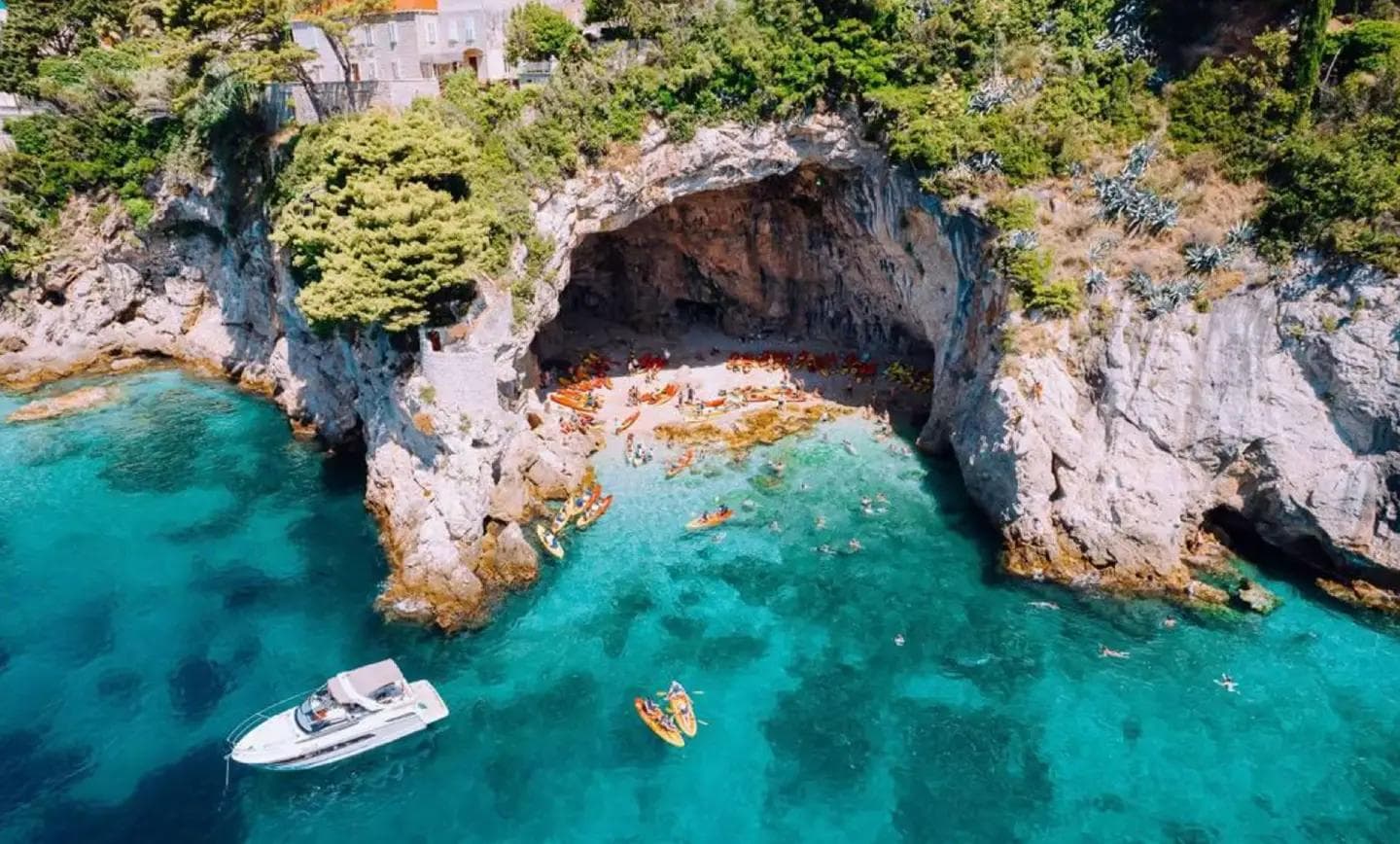
Betina špilja is a sea cave with a small pebble beach inside it, accessible only from the water. It sits directly below the Grand Villa Argentina hotel — guests look down at it from their terraces without knowing it exists. You can't reach it by land. You get there by boat.
Head to the Old Port in the morning, find one of the local fishermen or small boat operators, agree a price and a pick-up time, and they'll drop you at the cave entrance. Inside: a large cave opening, a carpet of white pebbles, crystal water, and complete silence. No sunbeds. No bar. No other tourists.
This is Dubrovnik before it became Dubrovnik. Don't forget to arrange your pick-up time — the alternative is swimming back, which is considerably less pleasant.
Local Secret #3: Park Orsula — The Viewpoint Tour Groups Never Find
Everyone goes up to Mount Srđ for the panoramic view. They either take the cable car (queues, crowds, €30 round trip) or they don't go at all.
Park Orsula is what they miss.
Located just below the Srđ cable car station, Orsula is a former open-air concert venue that was popular with locals for decades before falling into quiet obscurity. The views from here — directly over Lokrum Island, the Old Town walls, and the open Adriatic — are genuinely comparable to what you get from Srđ itself. The difference is that practically nobody is there.
The park is free, the hike to reach it is moderate, and the sunset from the upper terraces, with the city laid out below and the islands disappearing into the horizon, is the kind of view that makes you question every other sunset you've ever considered acceptable.
Take bus #17 from the Pile Gate to Bosanka, then walk down. Or hike up from the Ploče area if your legs are willing. Either way, do it in the late afternoon.
Local Secret #4: Bard Mala Buža — The Bar Behind the Bar
By now, almost every traveler has heard of Buža Bar — the cliff bar accessible through a hole in the Old Town walls, perched above the sea, where you drink cold beer on the rocks and watch the Adriatic. It's earned its reputation. It's also, at this point, thoroughly discovered.
What almost nobody knows is that there's a second bar, slightly further east along the same stretch of wall.
Bard Mala Buža sits just past Buža, down a set of steps through another gap in the walls next to the BARD coffee shop. It's smaller, quieter, and notably less photographed. The rock ledges are similar, the sea is identical, and the experience is what Buža used to be before it appeared in every travel roundup.
Both bars are cash only. Bring small bills. Order a local beer, find a flat rock, and stay longer than you planned.
Local Secret #5: Konavle Valley — The Day Trip Nobody Takes
Thirty minutes south of Dubrovnik, past the airport and the last of the resort hotels, the landscape changes completely.
Konavle is a rural valley where the tourist infrastructure of Dubrovnik simply stops. Small villages with stone houses, the Ljuta River running cold and clear through the bottom of the valley, vineyards producing wine that never makes it further than the local konoba tables, and a pace of life that hasn't particularly adjusted to the presence of four million tourists an hour's drive north.
The people who do come to Konavle are mostly Dubrovnik residents — for lunch on Sundays, for fresh air, for a reminder that Dalmatia extends beyond the city walls.
<br>Rent a car for the day (Dubrovnik's public transport doesn't reach here meaningfully) and follow the valley road south. Stop at any konoba that has cars outside — that's the local metric for quality. Order grilled lamb, local wine, and whatever seasonal vegetables they're serving. The bill will be a third of what you'd pay in the Old Town for food that doesn't come close.
Pasjača Beach is also in this direction — a secluded cove below towering cliffs, reached via a steep path and 200 stairs cut into the rock. The descent is genuine and the stairs are not for the faint-hearted, but the beach at the bottom is the kind of place people describe for years.
Practical Notes: How to Do Dubrovnik Without Hating Dubrovnik
A few things that locals know and tourists learn too late:
The walls in the morning. The city walls open at 8am. Locals who walk them do it before 9am, before the cruise ship passengers arrive and the temperature climbs. At 8:15am in summer, you can walk a section of the most famous medieval fortifications in the Adriatic in near-solitude. By 11am, the same path is a slow-moving queue.
The Buža Gate entrance. Most visitors enter the Old Town through the Pile Gate on the west side — it's where the tourist buses stop, which means it's perpetually congested. The Buža Gate on the north side of the walls is five minutes' walk from the same area, handles a fraction of the traffic, and deposits you directly into the quiet upper streets of the Old Town rather than onto the Stradun.
Bus #6 instead of a taxi. The bus from the Pile Gate to Lapad and Gruž runs regularly, costs around €2, and takes roughly the same time as a taxi in traffic. Taxi from the Old Town to the bus station: €15–25. Bus: €2. Locals take the bus.
Lunch at a konoba on Prijeko. Prijeko street, running parallel to the Stradun, has a reputation as a tourist trap — and for most of its length, that reputation is earned. But buried along it is Buzz Bar, a craft beer spot that pulls a local crowd, serves Croatian microbrews you won't find elsewhere in the Old Town, and stays open until 2am. It's the exception on a street of rules.
September over July. Every local says this when asked. The sea is warmer in September than it is in June. The crowds are a fraction of August. The restaurant queues disappear. The prices soften. September in Dubrovnik is the city operating closer to how it actually wants to operate — unhurried, warm, and considerably less exhausting for everyone involved.
One More Thing
Dubrovnik gets called overtouristed so often that some travelers have started avoiding it entirely, which is the wrong conclusion. The problem with Dubrovnik isn't that it's not worth visiting — it absolutely is. The problem is that most people visit the tourist version of it and miss the actual city entirely.
The city that locals inhabit is still there, running quietly alongside the one that appears in every travel magazine. It just requires a little more effort, an earlier alarm, a willingness to walk past the obvious, and occasionally a small boat.
That version of Dubrovnik is worth every bit of it.
Ready for your next adventure?
Compare flights, accommodation and activities – ljetovanje.com helps you find the best deals for your perfect holiday.
About Author: Jovan
Travel expert and contributor for Ljetovanje.com