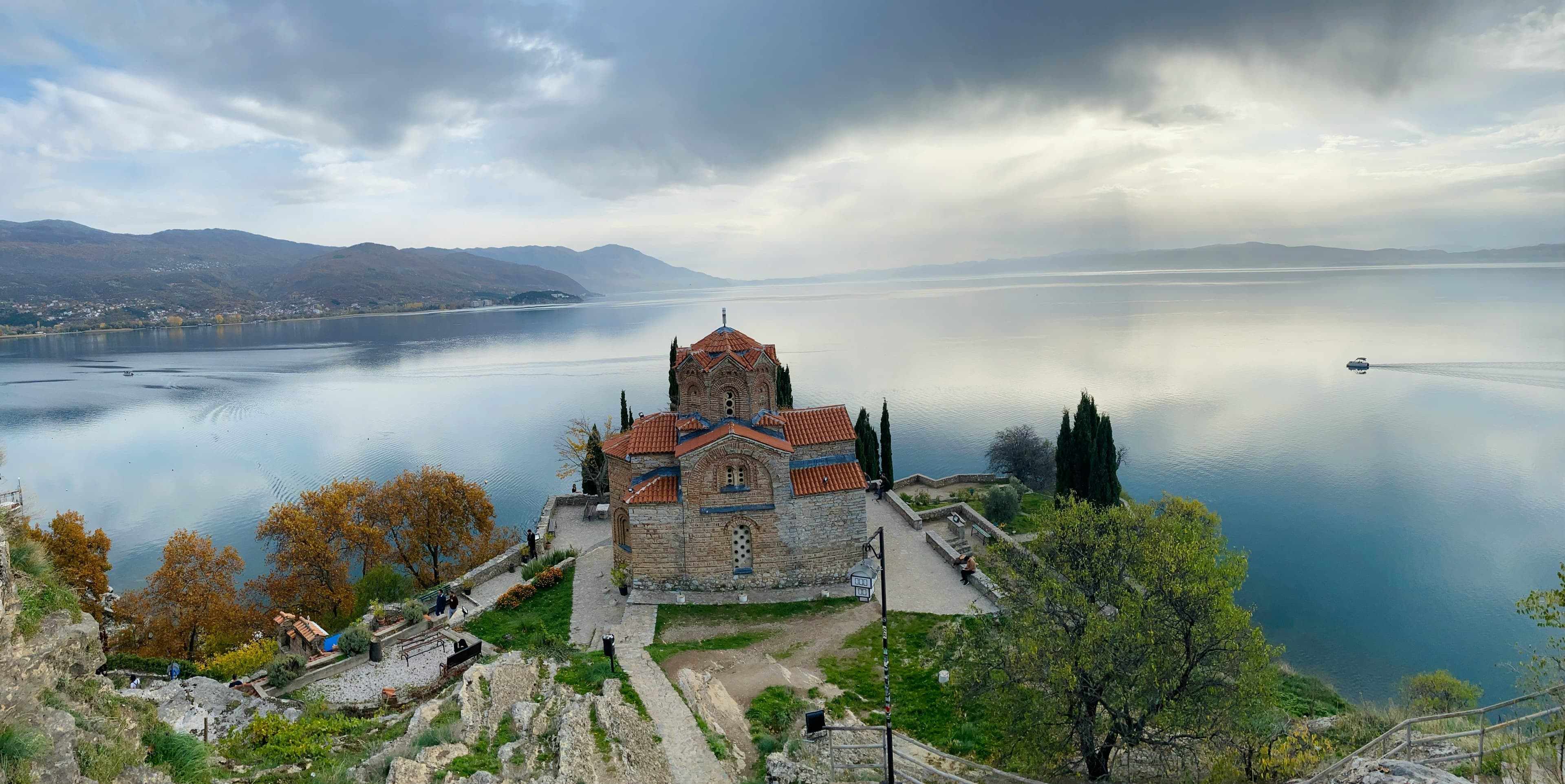
Let's be honest. When most people plan a European trip, North Macedonia doesn't make the shortlist. They go to Croatia instead. Or Greece. Maybe Slovenia if they're feeling adventurous.
And that's exactly why you should go.
There's a particular kind of travel magic that happens in places the world hasn't fully discovered yet — where prices haven't inflated to match the Instagram attention, where locals still find it genuinely surprising that you chose their country, where you can stand in front of a 2,000-year-old ruin and have it entirely to yourself. North Macedonia is sitting right in that window. The question is how long that window stays open.
A Country That Shouldn't Exist (But Does, Gloriously)
North Macedonia is, by any measure, a geographical impossibility that somehow works.
Squeezed between Greece, Albania, Kosovo, Serbia, and Bulgaria, it has absorbed centuries of empires passing through — ancient Macedonian, Roman, Byzantine, Ottoman — and emerged as something that can't be neatly categorized. Walk through Skopje's Old Bazaar and you'll hear the call to prayer echoing against Orthodox church bells. Sit down for lunch and you'll eat grilled peppers with feta and baklava in the same meal without anyone thinking that's unusual. Order wine at dinner and you'll get a glass of something genuinely excellent that the rest of the world has never heard of.
This is a country where Alexander the Great is a national obsession (the giant golden statue in Skopje's central square makes that abundantly clear), yet the same city has a mosque from the 15th century that's still in daily use. It's a place of layered contradictions that somehow feel completely natural once you're inside them.
Ohrid Is What Santorini Was Thirty Years Ago
If you only have one reason to visit North Macedonia, Ohrid is it.
Lake Ohrid is one of the oldest lakes in Europe — over three million years old, deeper than most people expect, so clear on a calm morning that you can see straight to the bottom from a boat. The town that sits on its shore has been continuously inhabited since the Bronze Age and holds more Byzantine churches per square kilometer than anywhere outside of Istanbul. UNESCO designated both the lake and the town as a World Heritage Site, for the kind of heritage that usually attracts enormous crowds and €30 entry tickets.
And yet.
In Ohrid, you can walk to the Church of St. John at Kaneo — perched dramatically on a cliff above the lake, one of the most photographed spots in the Balkans — and find maybe a dozen other visitors on a summer morning. You can swim in the lake directly beneath it. You can rent a small boat for an afternoon for the price of two cocktails in Dubrovnik.
The old town's cobblestone lanes have the same unhurried quality that coastal Dalmatia used to have before it became a cruise ship destination. Local restaurants serve tavče gravče (a slow-cooked bean dish that is far better than it sounds) and grilled trout pulled from the lake that morning. A carafe of local wine costs next to nothing.
This is what people mean when they say they want to experience Europe authentically. They just haven't found Ohrid yet.
Skopje: The Most Misunderstood Capital in Europe
Skopje is polarizing, and it knows it.
In the 2000s, the Macedonian government embarked on a controversial architectural project called Skopje 2014 — filling the city center with neoclassical monuments, enormous statues of historical figures, and facades designed to project ancient grandeur onto a modern city. The result is genuinely surreal: a giant Alexander the Great on horseback in the main square, a copy of the Arc de Triomphe, colonnaded government buildings that look like they belong in Rome.
Travel writers have not been kind to it. "Kitsch," "Disneyland Baroque," "a city-sized identity crisis" are phrases that come up often.
Here's the thing though: Skopje is one of the most interesting capitals in Europe precisely because of this tension. Five minutes' walk from the monuments is the Old Bazaar — Čaršija — one of the largest and best-preserved Ottoman bazaars outside of Turkey. It has been functioning continuously since the 12th century. Metalworkers, carpet sellers, tea houses, and small restaurants fill its lanes in a way that feels genuinely alive rather than preserved for tourism.
Cross the Stone Bridge that connects the bazaar to the modern city and you've walked from the 15th century to the 21st in thirty seconds. That's not a design flaw. That's Skopje.
And for any skeptics: the food is excellent, the nightlife is underrated, the coffee culture is serious, and a full dinner with wine for two people will rarely exceed €25.
Mountains That Hikers Haven't Found Yet
Around 80% of North Macedonia is covered in mountains. Three national parks — Mavrovo, Pelister, and Galicica — contain landscapes that would be overrun with tourists if they were in Austria or Switzerland.
Mavrovo has wild horses running on high plateaus above 1,500 meters. Traditional mountain villages in the park still produce sharp sheep's cheese and host the Galičnik Wedding Festival every July — a genuine centuries-old tradition where a village wedding is celebrated with costumes, music, and dancing that hasn't changed in generations.
Galicica National Park sits between Lake Ohrid and Lake Prespa like a ridge dividing two worlds — from the summit, you can see both lakes simultaneously on a clear day, with Greece visible in the distance. The hiking is excellent and almost entirely uncrowded.
Matka Canyon, just outside Skopje, deserves its own paragraph. A narrow gorge carved by the Treska River, its water is an impossible shade of green. You can kayak through it, explore medieval monasteries built directly into the canyon walls, or take a boat into a cave that extends hundreds of meters underground. Entrance to the canyon is a few euros. Kayak rental is similarly reasonable.
The Price of Everything
Let's talk about money, because it matters.
North Macedonia is one of the cheapest countries in Europe to travel in. Not in a "cheap but uncomfortable" way — in a "you genuinely cannot believe what this costs" way.
A good sit-down lunch with a drink: €5–8. A full dinner at a restaurant the locals actually go to: €10–15 per person with wine. A bed in a well-rated guesthouse in Ohrid: €25–40. A week-long car rental to drive the whole country: around €150–200.
For context, a comparable dinner in Dubrovnik costs three to four times as much. A guesthouse in Kotor during peak season will run you double. North Macedonia offers a travel experience that feels rich and unhurried at a price point that makes extending your trip by a few days feel completely rational.
How to Get There
The most direct option is flying into Skopje Airport (SKP), which has connections from several European hubs including Vienna, Istanbul, London, and Zurich. Wizz Air, Turkish Airlines, and Austrian Airlines all serve the route.
Alternatively, Ohrid has its own small airport (OHD) with seasonal flights from several European cities during summer — worth checking if Ohrid is your primary destination.
For those already traveling the Balkans, North Macedonia is easily reached overland from Thessaloniki (2.5 hours), Sofia (3 hours), Pristina (1.5 hours), or Tirana (3 hours). The border crossings are generally smooth and quick.
When to Go
May, June, and September are ideal — warm enough to swim in the lakes, cool enough to hike comfortably, and meaningfully less crowded than July and August. Ohrid in particular gets busy with domestic tourists in peak summer, though "busy" is relative to what you'd experience in comparable Croatian or Greek destinations.
July and August are still worth it if that's when you can travel — the lake is at its best, festivals are running, and the atmosphere is at its most vibrant. Just book accommodation in Ohrid a few weeks in advance.
One Last Thing
Every destination that's now overrun with tourists was once exactly where North Macedonia is today. Someone wrote about Dubrovnik in the early 2000s the way I'm writing about Ohrid now. Someone discovered Kotor before the cruise ships arrived.
The window for experiencing a place before it changes is always narrower than it seems.
North Macedonia is ready for visitors. The infrastructure is good, the people are welcoming, and the food is worth the trip alone. The only thing it's missing is the crowd — and that's the point.
Go now, before someone else tells everyone.
About Author: Jovan
Travel expert and contributor for Ljetovanje.com